Fastest: call (833) 751-2102. Or send this and we call you back.
Historic Homes
Roofing for Historic Homes: what it covers
Quick answer
Hartford Roofing connects you with an independent local roofer for older and historic houses in Hartford and Hartford County. The contractor looks at what is on the roof, how many layers there are, what the framing and flashing are like, and whether your town or district has review rules, then quotes the work in writing.
Roofing an old house is a different conversation from roofing a 1990s subdivision home. The roof may have gone through several rounds of repair, with new shingles laid over old, and the structure underneath may be older than anything in the building code. A roofer on this kind of job has to read the roof as a record of what has been done to it, and has to decide what can stay, what must come off and what will take the next fifty winters of snow.
Greater Hartford has an unusual amount of this housing. Old Wethersfield is the state's largest historic district at about 2 square miles, with roughly 1,100 buildings, more than 150 of them built before 1850. Glastonbury's historic district holds frame houses, three from the 17th century and 23 from the 18th. Manchester's Cheney Brothers district, a National Historic Landmark since 1978, includes about 210 company houses from 1850 to 1920, and West Hartford has early twentieth-century Colonial Revival and Tudor Revival districts.
Hartford Roofing is a call line, not a roofing company. You describe the house and what you are seeing, you are put through to an independent roofer who serves your town, and that contractor inspects, explains the options and quotes the work.
Possibly. Roofs on very old houses in a historic district can involve special materials or local review, so ask the town building office and the district before work starts. This site does not state what any specific district requires, because the rules differ by town and by property.
Old Wethersfield, the Glastonbury historic district, the Cheney Brothers district in Manchester and the West Hill Drive and Hartford Golf Club districts in West Hartford are among the named districts around Hartford. Being in a district, or having an old house nearby, does not by itself tell you what review applies.
The sensible order is to ask first, then choose materials, then get quotes. A roofer who has worked in your town can tell you what they have seen, but the town's answer is the one that counts.
Why does the number of roof layers matter on an old house?
Each layer adds weight and hides what is underneath. Connecticut's code limits asphalt shingles to two layers (IRC R908.3), so a roof that already has two usually has to be stripped to the deck. A tear-off also lets the roofer inspect the old boards instead of guessing.
Older roofs often have had shingles laid over shingles or over a different original material, and the extra weight can strain old framing. Some owners find out at the time of the quote that a roof they thought had one layer has three.
In towns with older housing, such as Portland, Canton and Farmington, local notes suggest asking for a tear-off inspection, which lets the roofer show you what is on the deck before you commit to a plan.
Is it better to repair an old roof or replace it?
It depends on the material and the condition underneath. A sound slate or cedar roof with a few failed pieces can often be repaired, while a roof with many layers, failing boards and repeated leaks usually calls for replacement. A written recommendation should explain which, and why.
Repair keeps what is original and spreads the cost, but it only makes sense if the roof is basically sound. Replacement costs more up front, and it lets the roofer fix the deck, the flashing and the ventilation all at once.
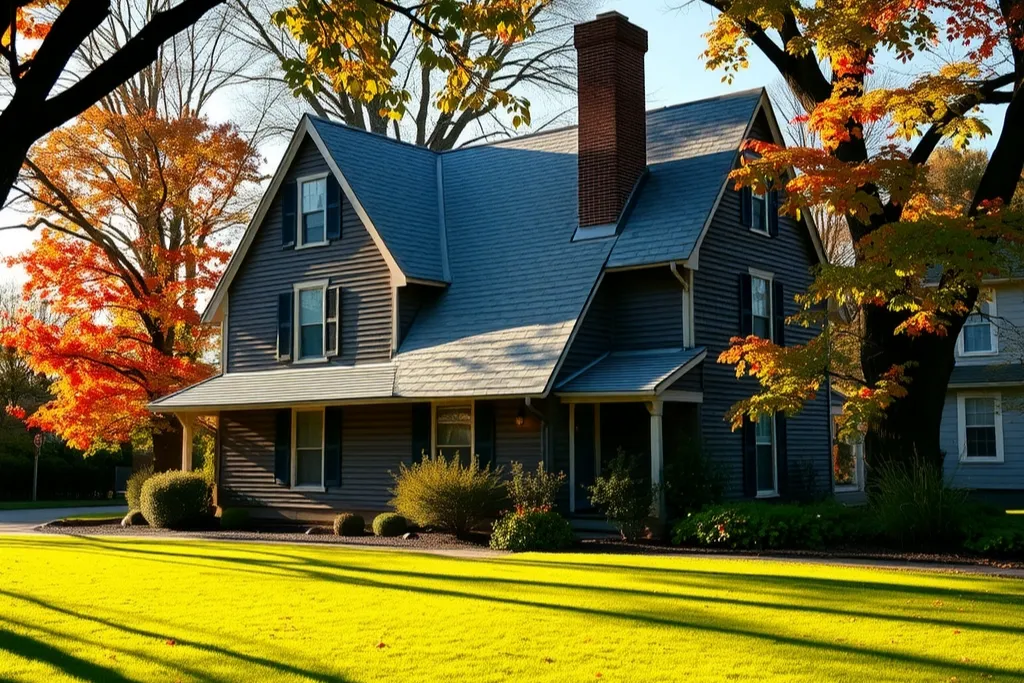
In Old Wethersfield, roofs on houses that predate 1850 raise questions of materials and district review before any work starts.A generated picture of the kind of Hartford-area roofline this page describes; it is not a photograph of any roof worked on for a customer.
Warning signs
Signs you need roofing for historic homes
Old roofs can have soft or rotted boards that do not show from above, and slate is both heavy and slippery. Do not walk on one, and stay clear of the ground beneath loose slate or a leaning chimney.
Shingles that feel soft, lumpy or uneven underfoot or look wavy from the street, a sign of several layers or sagging boards below
Slate or cedar that is slipping, cracking or missing, with pieces turning up in the gutter or the yard
Ceiling stains below a chimney, a dormer or the junction with a lower roof, where old flashing has worn through
Daylight through the roof boards in the attic, or boards that are dark, damp or crumbling
Gutters of an older style, including built-in or half-round types, that overflow, rust through or pull away from the fascia
Repeated patches in the same area, showing that the underlying cause has not been fixed
A chimney with crumbling mortar or loose flashing at its base
A plan to re-roof a house in a historic district without knowing whether any review applies
Our process
How our roofing for historic homes visit works
Find out what you have and whether rules apply
Before anything is ordered, the owner and the roofer should check whether the house is in a local historic district or listed, and whether the town requires review. Ask the town building office and, if applicable, the district's commission. Do this before a contract is signed.
Inspect the roof and the structure under it
The roofer looks at the surface material, counts layers where they can be seen and checks the attic framing and sheathing. On old houses, boards may be wide and uneven and may have been patched, so what is underneath determines what can go on top.
Decide: repair, restore or replace
A good slate or cedar roof can sometimes be repaired piece by piece. A roof with many layers and failing boards usually needs to come off to the deck. The contractor explains the choice in writing and, where the material is distinctive, whether it can be matched.
Detail the flashing and the chimney carefully
Chimneys, dormers, valleys and wall junctions are where old roofs leak. A roofer will usually replace flashing instead of coating it, and may suggest a mason for chimney masonry.
Document and finish
Photos of the old roof, the deck and the flashing before and during work make a useful record for the owner. The permit, if one is needed, is confirmed with the building office, and the final work is checked against the written quote.
Options
Types and options for roofing for historic homes
Slate and similar natural stone
Heavy and long-lived on the right framing, with individual pieces that can be replaced when they slip. Slate work is a specialist skill, and not every roofer takes it on, so ask whether the contractor has done it before.
Wood shingles and shakes
Wood shingles and shakes weather differently from asphalt, and where a house still has them they may be due for replacement. A roofer can explain how cedar differs from asphalt in ventilation, fastening and how it handles snow.
Asphalt shingles on an old structure
The common modern roof is also commonly used on old houses, and many have been re-roofed with it more than once. Building code limits asphalt shingles to two layers, so a third re-roof means a full tear-off. The choice of color and profile can be matched to the house's character.
An old house in Wethersfield's historic village needs a new roof, and the owner asks about district rules
What homeowners notice
The owner of a house in Old Wethersfield sees curled, worn shingles and daylight in the attic near the chimney. Because the house stands in the historic district, they want to know whether the town has a say in the roof material and the color before anything is ordered.
What we do
A roofer looks at the roof, the framing and the attic, and explains the options. The owner is told to contact the town about district rules and a building permit first, and the quote is written once the materials that are allowed are known.
What to expect
No order is placed until the town's answer is in hand, and the written quote names the material, the flashing and chimney work, and who is responsible for the permit.
An inspection visit, then a plan typical visit
Cost
How much does roofing for historic homes cost in Hartford?
A price cannot be given for historic roofing in advance, and published Connecticut guides disagree widely, so none is quoted here. These are the things that move the number.
Roofing for Historic Homes pricing in Hartford County (2026)
Job
Typical range
What it includes
Roofing material and how it is matched
Set by the contractor's quote
Natural slate, cedar and asphalt are different products with different labor
Tear-off and disposal of old layers
Known after inspection
More layers and rotted boards mean more work
Deck and framing repairs
Often found only when the roof is opened
Ask how the contractor handles discovered repairs and approval
Chimney, dormer and valley flashing
Itemized in the quote
Intricate roofs have more flashing, and masonry may be a separate trade
Permit and any district review
Confirm with the town
A full re-roof needs a building permit; review rules vary by town and district
The contractor confirms the price in writing after inspecting the roof, and before any work starts.
Still stuck? We pick up 24/7.
If it's an emergency, call now. For non-urgent roofing for historic homes, send the form and we'll call you back.
Why roofing for historic homes is different in Greater Hartford
Manchester's Cheney district is a good example of a roof problem that is shared. The company built or bought about 210 single- and multi-family houses between 1850 and 1920, and workers' houses of that age commonly have simple gabled roofs that are well past their first shingles. In towns like this, a roofer may find the same pattern repeated on neighboring houses.
Winter is the real test of an old roof. Hartford averages about 49 inches of snow a year, and an older house can have thin attic insulation and more air leaks, so heat escaping into the attic and refreezing at the eaves is a possible source of ice damage. Local guidance puts attic insulation at about R-49 to R-60, and the attic insulation and ventilation page explains how that interacts with old framing.
Farmington's older village houses may have slate, cedar or multi-layer roofs, according to local notes, and Plainville's older center has small homes with simple gable roofs that have decades of wear. Chimneys on these houses, which can leak at the flashing, are covered on the chimney repair page.
What a full re-roof involves in Hartford County: permit, tear-off, deck repair and a written contract, with an independent local roofer doing the work.
Asphalt shingles are the common choice on Connecticut houses, metal suits barns and homes that shed snow, slate and cedar belong mostly to older and historic houses, and flat membranes cover low-slope roofs.
Replace a roof when repairs are chasing one failure after another, not just when the calendar says so.
Read the guide
FAQ
Roofing for Historic Homes FAQs
Can I replace a slate roof with asphalt shingles?
Often yes, if the structure and any district rules allow it, but it changes the house's look and weight, and slate that is repairable may be worth keeping. Ask the town building office about review and ask the roofer to compare repair and replacement in writing.
Does my house have to match the original roofing material?
It depends on whether the house is in a historic district, is individually listed or is simply old. Nothing on this site says what your town requires, so check with the building office and any commission before you pick a material.
Why did my roofer find a third layer of shingles?
Past owners may have laid new shingles over old ones to save on tear-off. Asphalt shingles are limited to two layers under the Connecticut code, so a roof with that many layers needs to be stripped, and the roofer can show you photos of what is underneath.
Who pulls the permit for a re-roof on an old house?
Ask the contractor, who often arranges it, and confirm with the town building office. A full re-roof requires a building permit under the 2022 Connecticut State Building Code, while minor repairs usually do not, and structural changes such as dormers or pitch changes need extra plans.
Are old roofs more prone to ice dams?
They can be, because older houses often have less attic insulation and more air leaks around chimneys, hatches and light fixtures. Ice dams form when heat melts snow that refreezes at the eaves. See the ice dam removal page for the causes.
How do I find a roofer who handles historic work?
Tell whoever answers the call that the house is old or in a district, and ask the roofer you reach what similar roofs they have worked on. Check the contractor's Connecticut home improvement registration before signing, as explained in the registration guide.