Call to reach a local rooferHartford, CT 06103
Call (833) 751-2102
(833) 751-2102
Urgent? Call to reach a local roofer

Ice Dam Removal and Prevention in Hartford

Why ice builds up at Hartford-area eaves, how a roofer removes it safely and what stops it coming back.

  • Roof repair and full replacement
  • Ice dams, leaks and storm damage
  • Connected to an independent local roofer

Get a fast quote

Fastest: call (833) 751-2102. Or send this and we call you back.

Ice Dams

Ice Dam Removal and Prevention: what it covers

Quick answer

An ice dam is a ridge of ice at the eave, formed when heat escaping into the attic melts roof snow that then refreezes at the cold edge. It can force water under shingles and into the house. Hartford Roofing connects Hartford County owners with an independent roofer who removes the ice and advises on prevention.

Ice Dam Removal and Prevention illustration for Hartford, CT

An ice dam is not the same thing as icicles, though the two often arrive together. Icicles are the visible sign. The dam itself is a thick band of ice along the lowest edge of the roof that traps meltwater behind it, and the trapped water has nowhere to go but under the shingles.

Hartford averages about 49 inches of snow a year, and January days run near 36 F by day and 22 F by night. Local guidance says prime conditions are low-20s temperatures lasting several days with several inches of snow on the roof. In that window, a roof that leaks heat from the house below starts to melt its own snow.

Removal and prevention are different jobs. Hartford Roofing connects you with an independent roofer who serves your town; that roofer decides what to do, how, and for what price. This page explains the mechanism so you know what the visit should include.

Service area
Hartford & Hartford County
Availability
Call to reach a local roofer, emergencies first
Typical cost
Quoted by the roofer (estimate)
Warning signs

Signs you need ice dam removal and prevention

Do not climb a ladder to icy eaves or hit ice on the roof. Falling ice and a fall from a ladder are both real risks, and breaking the ice off tends to break shingles too.

  • A thick, continuous ridge of ice along the edge of the roof, not just separate icicles
  • Icicles of unusual size or number along one side of the house
  • Water stains on exterior walls below the eaves, or ceilings along an outside wall
  • A wet patch or frost on the underside of the roof deck at the lowest part of the attic
  • Snow melting off the upper roof while the eaves stay buried in ice
  • Gutters packed solid or pulled away from the house under the weight of ice
  • Peeling paint or bubbling plaster at the top of an exterior wall
  • A cold snap with several inches of snow, followed by dripping inside
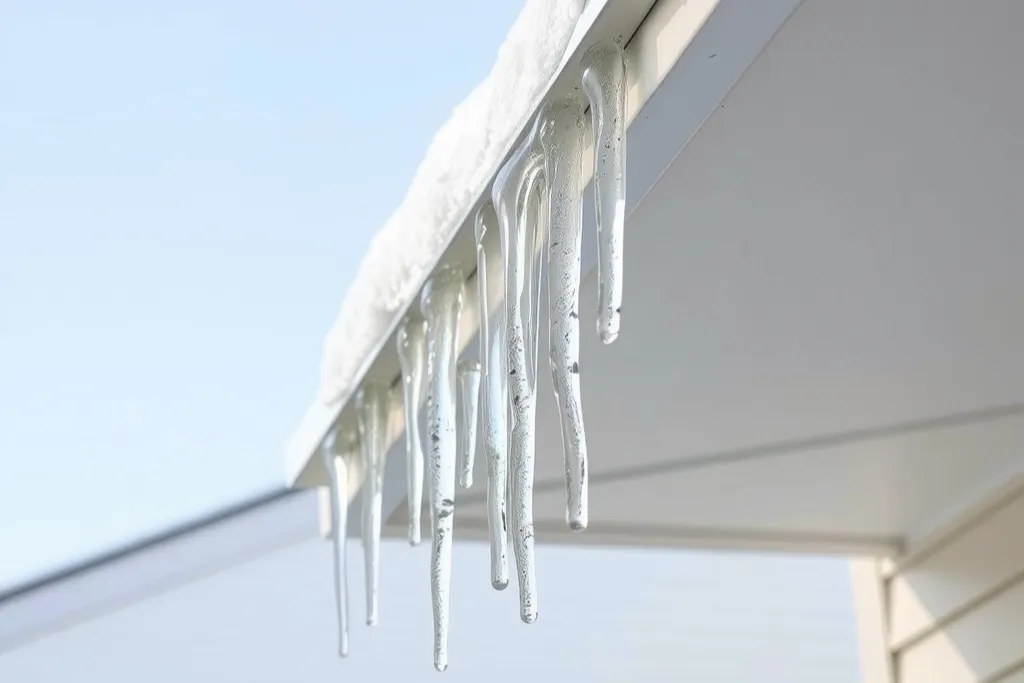
A ridge of ice and long icicles along the roof edge in front of white clapboard in winter.
Ice at the eaves forms when heat from the attic melts the snow above and it refreezes at the cold overhang.A generated picture of the kind of Hartford-area roofline this page describes; it is not a photograph of any roof worked on for a customer.
Our process

How our ice dam removal and prevention visit works

  1. You describe it and send photos

    Photos from the ground or from an upstairs window show the ice better than a description. Note where inside water is showing and when it began.

  2. The roofer assesses the ice and the roof

    Before removal, the roofer decides how thick the ice is, whether the gutters and shingles can take work and whether the edge is safe to approach. Some conditions need a different plan or a later date.

  3. Ice is removed from the eaves

    The aim is to open channels so meltwater can drain, not to clear every bit of ice. Chipping at it with a hammer or shovel can break shingles, so crews use methods meant not to damage the roof.

  4. Leaks and damage are checked

    With the edge open, the roofer looks for water that has already got in and for shingles lifted by the ice. Temporary repairs may come first, with permanent ones when the weather clears.

  5. Prevention is discussed

    The long-term fix is mostly in the attic: sealing air leaks and adding insulation. A roofer may do some of this, point you to an insulation contractor or leave it to you.

Cost

How much does ice dam removal and prevention cost in Hartford?

No price figure appears on this page. Ice removal is priced by the job, and published Connecticut figures for roofing disagree. These are the things that shape a quote.

Ice Dam Removal and Prevention pricing in Hartford County (2026)
JobTypical rangeWhat it includes
Length and thickness of the iceSet by the rooferA short run on a low roof is a different job from a thick band all around a house.
Height and accessPriced on the visitSecond-story eaves and steep pitches need more equipment and care.
Interior or roof damage foundQuoted separatelyRepairs to shingles or ceilings are not part of removing the ice.
Prevention workDepends on what the attic needsAir sealing and insulation may be a different contractor's work.

Ask whether the quote is for removal only, and what you would pay for a return visit if ice forms again before the attic is fixed.

Job stories

Typical jobs for ice dam removal and prevention

Typical job
Illustration: Ice builds at the eaves of a single-story house in Southington after a week of cold and snow

Ice builds at the eaves of a single-story house in Southington after a week of cold and snow

What homeowners notice
After several days in the low 20s with snow on the roof, a ridge of ice grows along the front eave of a single-story house on a wooded lot. Water starts to appear at the top of an exterior wall inside, and the homeowner notices the attic hatch is cold to the touch but the ceiling below it is warm.
What we do
A roofer works from the ground and the roof edge as conditions allow, removes the ice that is backing water up, and avoids salt or chemical melt that can harm shingles and gutters. They then look at the attic for the air leaks and thin insulation behind the problem, such as the hatch, a bath fan and recessed lights.
What to expect
The immediate water is stopped, and the quote lists the attic sealing, insulation and ventilation work that would keep heat from melting the snow in the first place.

Removal in a few hours, attic work scheduled separately typical visit

Why do ice dams form on Hartford-area roofs?

Heat from the house escapes into the attic and warms the roof deck. Snow on the roof melts from below, runs to the cold overhang and refreezes there. Over days the ice builds into a dam that holds meltwater against the shingles and pushes it under them.

The roof does not need to be old or damaged for this to happen. The cause is the temperature difference: a warm roof surface in the middle, a cold eave at the edge, and snow in between. Several days of low-20s temperatures with several inches of snow are the setting local guidance names.

The leak then arrives where the shingles meet the ice. Water backs up a few feet from the edge, finds the gaps between shingle courses and runs down inside the wall or through the ceiling, often at an exterior wall.

Should I chip the ice off myself?

No. Chipping at ice with a hammer, shovel or ax can crack shingles and gutters, and standing on a ladder against icy eaves invites a fall. Falling ice can also hurt you. Do not put salt or calcium chloride on the roof, since local guidance warns against both.

Owners reach for salt because it melts ice, but it can corrode metal and stain surfaces, and the water it releases does not have an easy path off the roof. Guidance in the area advises against salt and calcium chloride on a roof.

The safe thing you can do from the ground is pull snow off the bottom of a single-story roof with a long roof rake, standing clear of anything that falls. Beyond that, call a roofer, who has fall protection and methods that do not tear the roof.

If water is already coming in, catch it indoors and keep clear of any ceiling that is bulging. The emergency roof leak repair page explains what to do while you wait.

What actually prevents ice dams from coming back?

Stopping heat from reaching the roof deck: seal air leaks from the house into the attic, such as pull-down stairs, vent fans and recessed lights, and add insulation to the R-49 to R-60 range local guidance names. Ventilation helps keep the deck cold. Removal alone does not fix it.

The attic is where the cause lives, so that is where prevention starts. Gaps around pull-down attic stairs, bathroom and kitchen fans, recessed lights and chimneys let heated air rise into the attic. Sealing them is usually the first step, before more insulation goes in.

Insulation on top of the attic floor then keeps what heat remains in the house. Ventilation lets cold air move under the roof deck so it stays near outdoor temperature. A roofer can look at this from above, but some work belongs to an insulation or air-sealing contractor.

Ask the roofer who does what. If the roof also needs repair at the eaves, the roof repair page covers that side.

Will an ice dam damage my roof or my house?

It can, in two ways: water pushed under shingles can soak the deck, insulation and ceilings, and the weight of ice can pull gutters off or lift shingles. Whether yours does depends on how long the dam sits and how well the roof edge is protected. Early removal limits the damage.

Insurers saw the effect in early 2026. Ice dam claims were expected to climb in Connecticut, and State Farm reported about 200 claims in the state after a single snowstorm.

That does not say what yours would cost or whether your policy would respond. It says that ignoring a dam is the expensive option. If you suspect water inside, photograph it and ask the roofer to describe what they found.

When does an ice dam need a roofer rather than waiting for a thaw?

Call when water is coming inside, when the ice is thick and continuous along the eave, or when gutters are pulling away. A thin band that melts off in a day or two is less urgent. If you are unsure, send photos and describe what is happening indoors.

Time is part of the damage. A dam that sits for a week through a cold spell gives water more time to find a way through, while one that thaws quickly may cause nothing. Interior signs are the deciding factor: a damp wall or a stain growing on a ceiling is a reason to call now.

Where the roof is tall, steep or sheathed in ice, the work is for someone with fall protection. After the ice is down, ask for a look at the shingles at the eaves, since a dam can lift them, and see the gutter repair page if the gutters took the weight.

Options

Types and options for ice dam removal and prevention

Removal during an active leak

The ice is cleared from the eaves to let water drain, and any interior damage is assessed. This is a response to a problem in progress, and it does not stop the dam forming again in the next cold spell.

Snow removal with a roof rake

On a single-story house, a roof rake pulled from the ground can take snow off the lower few feet of the roof before it melts and refreezes. Local guidance lists it as a precaution. It is not a way to chip off ice.

Prevention at the source

Sealing air leaks into the attic and bringing insulation to the R-49 to R-60 level local guidance names keeps the roof cold enough that snow does not melt from below. See attic insulation and ventilation.

Hartford County

Why ice dam removal and prevention is different in Greater Hartford

The Hartford area gets the full set of conditions. About 44 inches of precipitation a year falls here, nearly 49 inches of it as snow, and January nights sit around 22 F. Dams are most likely when a cold spell holds and a roof that leaks heat has snow on it.

The age of the housing adds to the picture. A median year built of 1931 is reported for Hartford, and houses of that era commonly have older, less insulated attics than current guidance describes. Whether yours has been upgraded is something to look at from inside.

Skip the guesswork. Call for a straight answer.

Tell us what's happening and we'll tell you honestly whether it's a quick fix, and what ice dam removal and prevention should cost.

Related

Emergency Roof Leak Repair

Water through a ceiling after a thaw or storm: what to do first, and how a call connects you to an independent local roofer.

Roof Repair

Missing shingles, lifted tabs and slow leaks on Hartford-area roofs, repaired by an independent local roofer you reach with one call.

Guides

Read before you book

FAQ

Ice Dam Removal and Prevention FAQs

Are icicles always a sign of an ice dam?

No. Icicles alone are common after a thaw. A dam is a thick, continuous ridge of ice along the eave. Large icicles in one area with water stains inside suggest melting from below, which a roofer can check.

Can I use heat cables?

Some owners do. They open a channel in the ice but do not stop heat escaping from the attic, and installation matters. Ask a roofer whether they suit your roof before buying.

Will the ice dam come back after it is removed?

It can, in the next cold spell with snow, if the attic is still leaking heat. Removal clears a problem in progress. The lasting fix is air sealing, insulation and ventilation.

Is a roof rake enough for a two-story house?

A rake reaches only the lower part of a low roof from the ground. A taller roof usually calls for a roofer. Do not climb up with the rake in snowy or icy conditions.

Does Hartford Roofing remove the ice?

No. Hartford Roofing is a call line that connects you with an independent local roofer, who does the work and sets the price. Timing depends on when a crew is free and on the weather.

What should I photograph for the roofer?

Take wide shots of each side of the house showing the eaves, close shots of any ice ridges and icicles, and any stains inside with a date. A quick note on the weather over the past few days helps too.

Find Hartford Roofing on